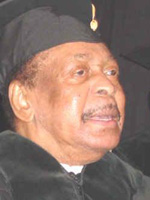
 Buster looked very tired at the Oklahoma City University Doctorates. I knew it was time to finish the column I had started on him. I wanted him to enjoy it. Because he was so loved, I planned to get quotes from many various people. I had to stop asking because everyone responded. The publication was Dancer Magazine and I simply didn’t have enough space. I edited down everything and Buster knew nothing. When the article came out, Charles Goddertz took his copy to present to Buster at Swing 46 and Traci Mann read it over the mike. They said Buster was speechless and just loved it. When I was in New York in July, a lady introduced herself to me as Hannah’s mom (the small child Buster taught, always at Swing 46). She said she spent lots of time at the hospital with Buster before he died and he asked her to help him write me a thank you letter. They began but it was never finished. She wanted me to know. It brought me joy. When I attended the St. Louis Tap Festival, Leonard Reed, who had the first quote, said that Buster had phoned him and said, “how did you remember that?” I am sure Buster felt pleased about each one of them and I regret that I could not have included more. I wrote another article after Buster died and I have allowed both to be printed in many places. They have been in Dancer Magazine, www.eDionysus.com, Universal Jazz Newsletter, German Tap Newsletter (now being translated), a future International Tap Newsletter and a future special edition on Buster's life by Megan Haungs, in addition to this site. I think Buster would approve of my generosity with his stories. He was a generous man throughout his life. I am happy that he lived to enjoy the article because it was written with much love and respect. Melba Huber
Buster Brown, New York's Favorite Tap Dancer Everyone loves Buster Brown. He is always at every tap event to cheer, support, encourage, sing, tell jokes, dance or act as master of ceremonies. Every Sunday he hosts a tap jam at Swing 46 in New York City where everyone goes tap dancing. Here are a few recollections from friends. Leonard Reed: Performer, Producer, Creator of the Shim Sham Savion Glover, Artist Ted Levy: Teacher, Director, Performer, Choreographer Tony Waag, Director of New York City Tap Festival Delilah Jackson, Dance Historian Jo Rowan: Chairman Dance Oklahoma City University Acia Gray: Director of Austin Dance Company, Tapestry Jim Lerman: New York Tap Committee Member Michela Lerman: Protégé of Buster Nicole Hockenberry: Director of T.A.P. Company, Easton, Pennsylvania Charles Goddertz: Choreographer, Teacher John Bedford: Dean, School of American Dance and Arts Management, OCU Terry Monaghan and the Jiving Lindy Hoppers Buster’s career spanned from vaudeville circuits to Broadway’s Black and Blue. He performed the Duke Ellington Sacred Concert, toured with Savion’s Footnotes, danced in The Cotton Club (movie) and tap documentaries, featured with Cab Calloway’s Band, and member of the Copasetics. Buster Brown was awarded an honorary doctorate by Oklahoma City University in February. One of the most popular tap dancers in history, his career and contribution to tap is major and continues. Everyone loves Buster!
Gotta Go Tap Dancing Gotta Go Tap Dancing! That phrase will live forever, reminding the fans of the late, great, genial, Buster Brown who died in his sleep on May 7 in a New York hospital. Friends sat with him taking turns holding his hand while music played. After age 80 careers are not expected to flourish, but James “Buster” Brown’s did. In New York at Club Swing 46, he celebrated with the many who “Gotta go tap dancing” every Sunday evening. All ages. He was a positive force in dance, probably not completely realizing the artistic influence he had on so many people. “Buster was a great humanitarian in the tap world,” stated Robert Reed, Rhythm Tap artist-in-residence at Oklahoma City University and Director of the St. Louis Tap Festival. “He helped lots of tap dancers and always gave and helped with a smile. He made you feel you could conquer the world.” At the February Oklahoma City University Honorary Doctorates presentation, each honoree participated in a history session the previous day. It was my honor to host it and I asked each of them to speak on a specific subject: Jeni LeGon, the Chorus Girls; Fayard Nicholas, the Cotton Club; Bunny Briggs, Dancing with Duke Ellington; Cholly Atkins, Dancing with Count Basie; Prince Spencer, The Step Brothers; Leonard Reed, The Minstrels and Circuits; Jimmy Slyde, Tap’s Future (he also danced); Henry LeTang, the Hoofers Club; and Buster Brown, Swing 46. When it was Buster’s turn, he went into his entire act, everything from the light bulb joke to Cute. He was so generous and the OCU students had a rare opportunity to see him perform and a moment they will always remember. It was a huge effort for him to make this trip, but he was overjoyed with the honor. A week later on the phone he told me, “ I still can’t believe it, but everybody calls me Doctor, so I’ve got to believe it. This was the biggest highlight in my life and the greatest feeling I’ve ever had.” During the entire ceremony he had tears in his eyes and kept a handkerchief in his hand. Many of the honorees responded the same way. Several months earlier when he moved to the Actors Home for rehabilitation after being released from the hospital, the Swing 46 group took the show to him. All the other people at the home enjoyed the show and some even danced a little and wanted them back every week. Taking the show to Buster was a great event. During my many years of frequent visits to New York City, I attended every tap event that was happening, and no matter who or where, Buster was always there. He was at La Cave or La Plaz when Jimmy Slyde held his sessions. He supported and encouraged everyone. Buster learned his dancing on the streets of Baltimore and danced with the Three Aces and the Speed Kings. He was later a member of both the Copasetics and The Hoofers and toured with most of the swing big bands. “Mercurial, yet thoroughly dependable, Brown had the manner of an English gentleman, but his superlative tap skills and immaculate flared trousers soon gave him away,” London dance writer Terry Monaghan said. “Flares and tap dancing have come back into vogue, but tap could have faded away completely, if not for determined characters like Buster. During the 1960s and 70s he danced to jazz music in any way he could-from Cake Walking to Lindy Hop.” Monaghan feels that it tends to be forgotten that Buster was a Lindy Hopper as well as a tap dancer. He always supported the London based Jiving Lindy Hopper gigs in New York and gave lessons. He was a regular at the Savoy Ballroom in Harlem and helped keep the Lindy Hop alive after the Savoy closed. “Buster is not just a legend, he is a multi-legend,” Monaghan concluded. In 1969 Buster toured Africa, sponsored by the United States State Department. He was in the Paris and Broadway Black and Blue and Bubbling Brown Sugar. He performed Duke Ellington’s Sacred Concert, and toured with the Cab Calloway band. He had roles in The Cotton Club and Tap with Gregory Hines. Savion Glover honored him in Bring In ‘da Noise, Bring In ‘da Funk, and featured him in his touring show, Footnotes. Buster never made negative comments about anyone and was probably the most positive person in tap when encouraging others. Michela Lerman, 14 years, a protégé of Buster, said he never told her she was doing a step wrong. He would say, “That’s o.k, that’s your way.” He was never selective. All levels danced at Swing 46. All ages danced at Swing 46. All races danced at Swing 46. Buster just loved being helpful to all. “I think tap heaven might be something like Swing 46, ”said Megan Haungs. Those who knew him and loved him were truly blessed. Gotta Go Tap Dancing. Long Live Buster Brown. |